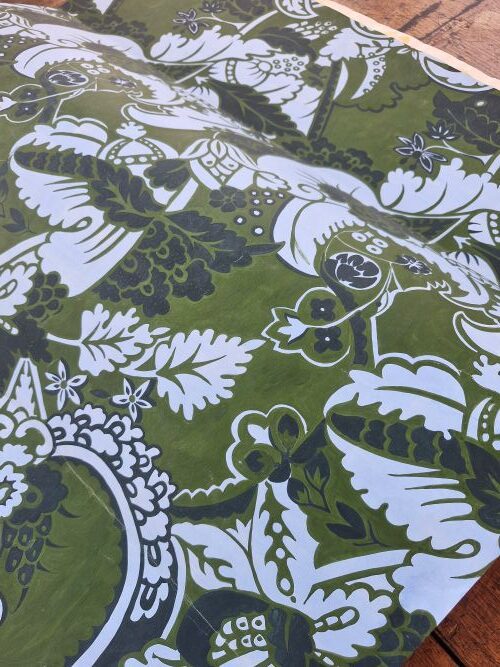
In the 18th century, influences from the Far East began filtering into European style through imported goods such as porcelain, lacquerware and textiles. Trade through the English, Dutch and French East India Companies introduced new ideas and fashions which changed tastes throughout Europe. Following the more formal pomegranate silks of the late 17th century, the imaginative designs we now call Bizarre silks emerged and became highly fashionable.
Designs by James Leman can be described as Bizarre silks with a distinct oriental influence. Unlike many continental designs of the period, English silks frequently portrayed flowers more naturally rather than as highly stylised forms. One useful reference is Natalie Rothstein’s Silk Designs of the Eighteenth Century. Humphries Weaving has had the pleasure of working with curators, historians and collections managers all over the world, including Natalie Rothstein.
We specialise in authentic period fabric recreations, meticulously recreating historic textiles from stylised floral designs to custom colourways developed from historical documents. Designs we have recreated from our archive can now be found in both public and private historic houses across the UK and worldwide.
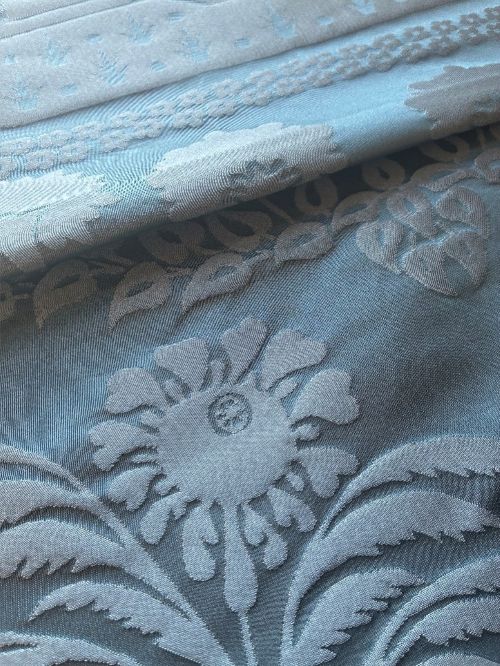
An example in our archive which we worked alongside Natalie Rothstein & the V&A is a Chinoiserie style damask (Ref. 2179) attributed to James Leman of Spitalfields. In these textiles we can see James Leman interpretation of carnations in a Chinoiserie style as well as Narcissus, which are feature heavily in Chinese porcelain which was important to Britian. In British culture, the Narcissus represents rebirth and the arrival of spring, whereas in Chinese culture it is considered an auspicious New Year flower representing prosperity and good fortune.
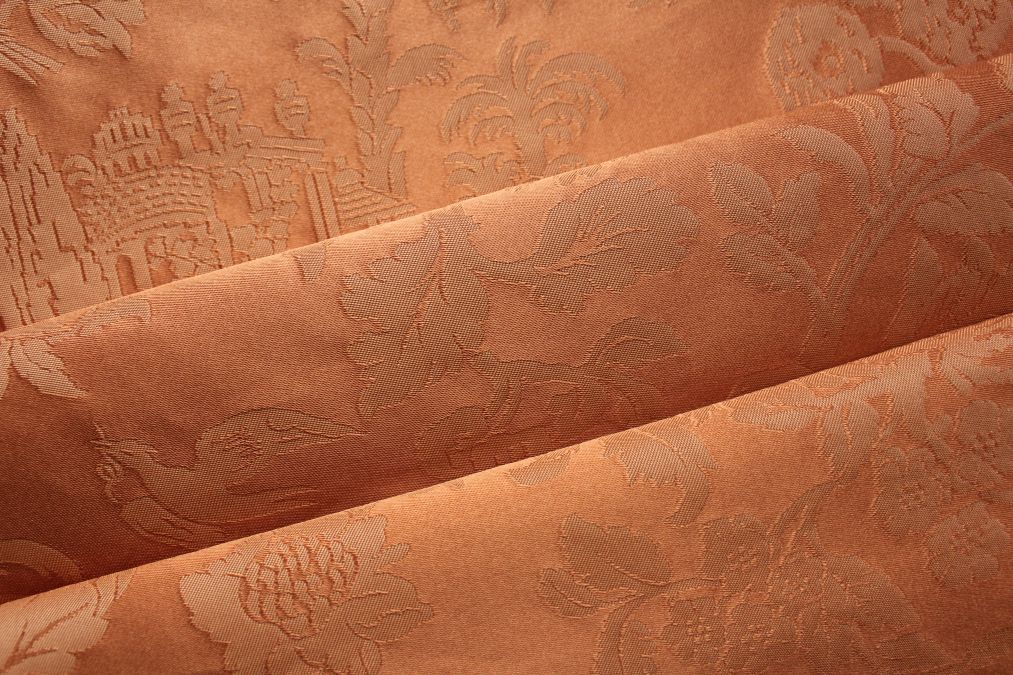
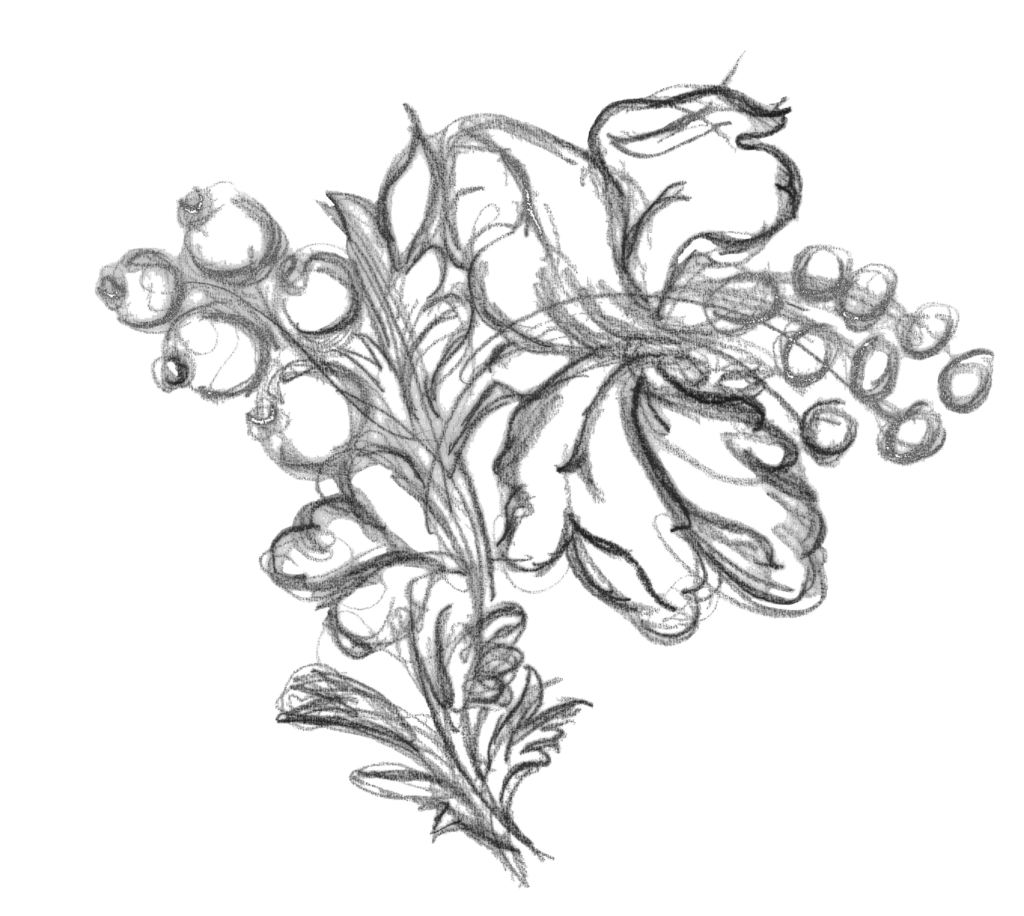
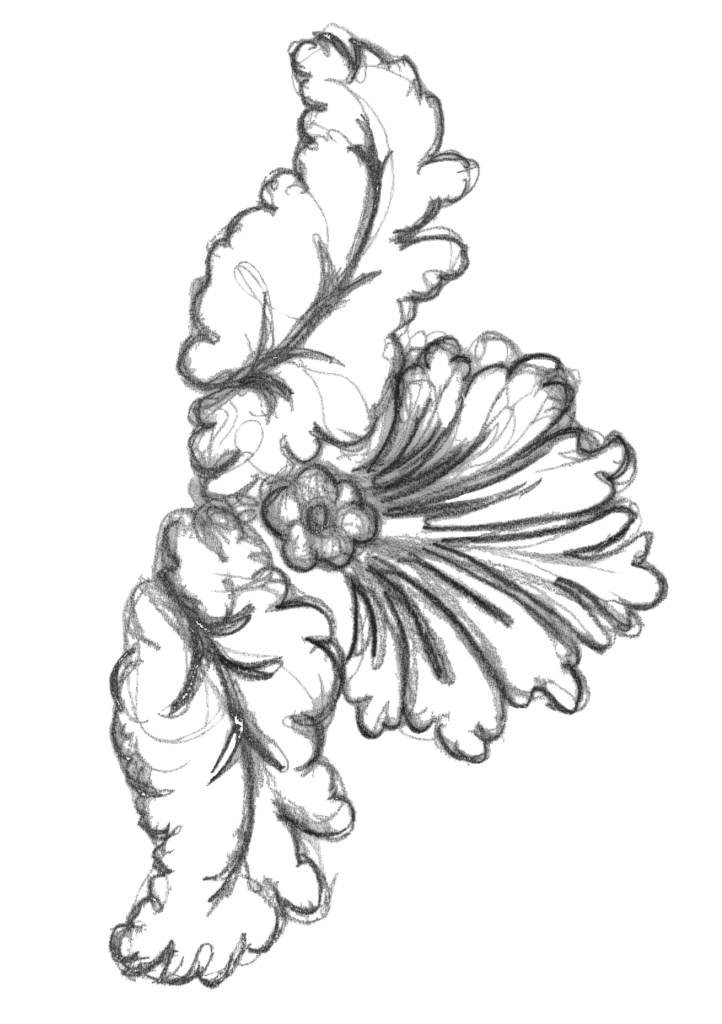
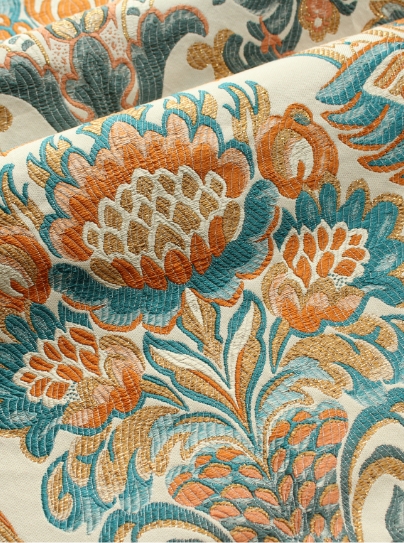
Our Chinoiserie Valentines (Ref. F28890) fabric has been recently recreated from our archive, redrawn and set up for production. This design is estimated to be from 1890’s where it was fashionable to recreate an oriental style. The Palm trees in this design are not wholly dissimilar to the palms from the James Leman design we previously recreated. In our Chinoiserie Valentines, there is a mixture of stylised flowers and foliage with European influence such as the acanthus-shaped leaves, along with Palms, cyathiums, and peonies.
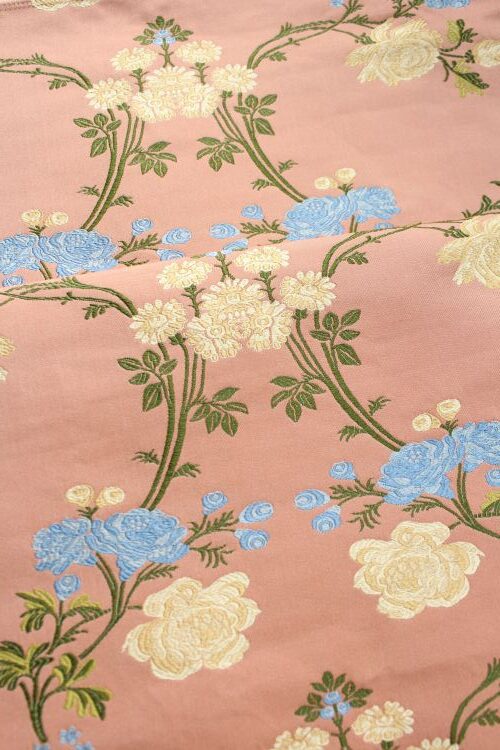
Our Geraldine Tissue (Ref. 5444), has been recreated from our archive. The original fabric is thought to date from the 1760s and was woven as a brocade, whereas our recreation has been produced as a tissue. The design displays a clear East Asian influence. To me, the flowers look like a stylised cross between a rose and a peony, a fashionable 18th century Chinoiserie interpretation of floral design. The combination of flowing foliage, exotic motifs and stylised blooms demonstrates how eastern influences continued to shape textile fashion during the period.
Contact our team to explore how our Expert Consultancy for Designers and Heritage Properties can bring depth, authenticity, and beauty to your interior scheme. We’d love to hear about your vision and share how we can help make it a reality.